concrete resurfacing ottawa | The Floor Company - Part 2
ETHAN@THEFLOORCOMPANY.CA | TEL: 613-866-7990
Serving Ottawa, Belleville, Peterborough and Renfrew

Blog

All posts tagged concrete resurfacing ottawa

Eco Polish Decorative Concrete Flooring

“Eco Polish” is how we have branded our grinded concrete clear epoxy floor. We have coined it this because it is both economical and ecologically friendly.

The Eco Polish floor is recommended for those who want an exposed aggregate floor but also need stain resistance, deep colour, water proofing, salt resistance and more. Eco polish concrete floor ottawa

It is especially recommended for those spaces that are commercial and street facing in climates that get snow. This is because traditional exposed aggregate floors, such as polished concrete, are often porous. Porous floors that are installed in frequently wet and salt exposed areas will certainly degrade years before an epoxy coated floor.

Here is the Eco Polished Concrete process:

1) First we grind the floor to expose the stones and evenly remove all of the “cream coat”. This ensures even saturation of the epoxy leading to a consistent colour and durability.
2) Then we repair the floor. Typically this means filling cracks, joints, holes and divots with an epoxy paste we make using the very grinding dust from your floor, to help with colour keying to your final surface.
3) We then coat the floor in solid epoxy. (The 100% solids part means there are no smelly solvents used.)

So far, we have described our basic Eco Polish floor. At this point, the floor is complete and contains all of the benefits we went over above. However, the floor may have some imperfections such as air contamination, dust, bugs etc… caught in the surface. This happens at times because the epoxy is sticky when it’s curing for up to 8 hours.

As a highly recommended option, we suggest finishing this new surface with one coat of urethane. Urethane (available in matte, satin, and gloss sheens) is preferred because it provides UV stability, abrasion resistance and, by nature of installation method and its quick cure window, a near perfect sheen and texture.

Another great benefit to our Eco Polish concrete floors is that they are very forgiving. Should you run a busy commercial space for example, and your maintenance lapses, these floors are usually quite resilient and will recover rather well as compared to traditional non-coated polished concrete.

While Eco Polish floors may take about 30% longer to install than regular polished concrete, the longevity and ease of ownership create a great reward long term, and the look is unparalleled in the industry.

We think you’ll love all of our exposed aggregate options, speak to a professional today to help decide which one works for your space.

Are Concrete Floors Cold and Damp?

Concrete can be a very cold material, as the material itself is smooth and unforgiving…however, concrete is no colder than ceramic or stone, so why give concrete the cold shoulder?

Unlike other materials, with concrete, you have the ability to install radiant heating cables, which are special cables that give off plenty of heat. By putting these in your concrete floors, you will experience heated flooring with concrete!

are concrete floors warm

Concrete floors end up being warmer with this method, and if you are designing a home as opposed to simply re-flooring a room, see about allowing as many windows as possible, so that the concrete can take in the heat from the sunlight and hold it in, thereby making the floors even warmer (wintertime would be a nightmare without any sort of heating for your concrete floors).

It can become a terrible hassle if a concrete floor is built on a subgrade that does not drain accordingly, as this will cause your concrete floor to become awfully damp. Dampness can also occur from not having insulated the area properly enough, as moisture and water will then seep into the concrete and cause inevitable dampness.

So, for ensuring that your concrete floors are warm and dry, you must make sure that your floors are laid and installed correctly, and a bit of research on your own time would not go astray, as it would be in the greatest of benefits to you to know about concrete flooring installation beforehand, that way you can make sure the contractor is doing things correctly (if it’s a younger contractor, you run the risk of him not knowing any “tricks of the trade” or whatnot).

In today’s society, methods are being used to help stop moisture and water from getting in and under your concrete floors (besides insulation), and that is through contractors and carpenters placing a vapour barrier within the concrete slab, in order to protect from the invasion of moisture.

You see, at the end of the day, if your concrete floors are put in correctly, and they are heated properly, you would not have much to worry about in the way of walking on a stone-cold floor in the wintertime.

If you have any questions for a concrete professional, contact us today!

Why You Should Test Concrete Before Finishing a Floor

You’ve heard the expression before: “Measure twice cut once”.

When it comes to concrete slabs, this is doubly important because an error in judgment or a lack of uncovering underlying issues, is much more costly when coating concrete than with just about any other renovation or addition to a structure.

It’s very important to test for multiple conditions in concrete before finishing a floor. This is especially true when choosing a finish that is not porous and doesn’t allow the slab to breathe.
improper floor preparation
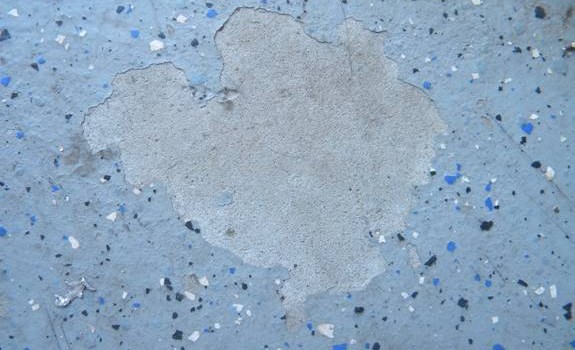
If there is contamination in the slab that has not completely gassed off (evaporated) or been worn away, this may not even be noticeable prior to putting a coating down. Once the floor can no longer breathe, you may become surprised to see some unwelcome additions to your finish such as; bubbling, hollow spots or complete de-lamination can be the end result of trapped floor contamination.

It is also very important to check the slab porosity, hardness, pH levels and moisture content.

There are do it yourself ways to test all of these variables; however, they typically only test one extreme end of the range of measurement.

Concrete flooring professionals can provide you with the results and peace of mind you need prior to making an investment in decorative or protective concrete flooring. In fact, even if you are installing your own tile or hardwood it is always a good idea to have a concrete professional come to your project and test for moisture and porosity prior to install.

In the case of hardwood flooring, high moisture can cause warping and swelling. With tile, low porosity could leave to a bad bond of the glue or mortar.

When working on concrete close to exterior walls or foundations or even in garages, it is very common to see a white powder – called efflorescence appearing due to high moisture content. While in some cases the moisture content causing this a efflorescence is low enough to be coated, however, in other cases if coating was the action taken, it would most certainly lead to a failure.

Hardness of concrete is also a factor when choosing to seal or paint. When sealing or painting a concrete slab it is very important to prepare the surface via abrasion. If the concrete is too hard, which can be measured using the MOHS scale, it very like won’t be a good surface to receive a topping until it has been grinded via diamond segments. This is because high hardness and low porosity are quite often found in the same places.

To ensure success with flooring over any concrete surface, your best bet is to have a concrete professional provide you some data on your slab before install.